Prime Minister's Office

The Prime Minister's Office carries out official duties of the Prime Minister of the Democratic Socialist Republic of Sri Lanka and provides necessary guidance, coordination facilities and leadership to achieve economic and social development goals in accordance with the government policies.

Moreover, the Prime Minister’s Office provides necessary leadership and guidance to fulfill the aspirations of people while standing by the side of them in the hour of need with great enthusiasm and commitment. It provides regular assistance in policy making and also necessary contribution, guidance and coordination through a people centered approach to achieve Sustainable Development Goals (SDG). It plays a crucial role in maintaining diplomatic relationships and international relations, through facilitating negotiations, conducting high level diplomacy with foreign leaders, countries, states and representatives and coordinating the efforts of various government agencies and departments involved in foreign affairs.

Vision

“An independent, sovereign and prosperous Sri Lanka”

Mission

“To provide the necessary leadership for an excellent government mechanism with good governance, maintaining an effective coordination between States, Foreign missions, United Nations and Non-Governmental institutions in order to realize the aspirations of the Sri Lankans and improve their quality of life”

Steps are being taken to formulate a Policy for Higher Education - Prime Minister Dr. Harini Amarasuriya

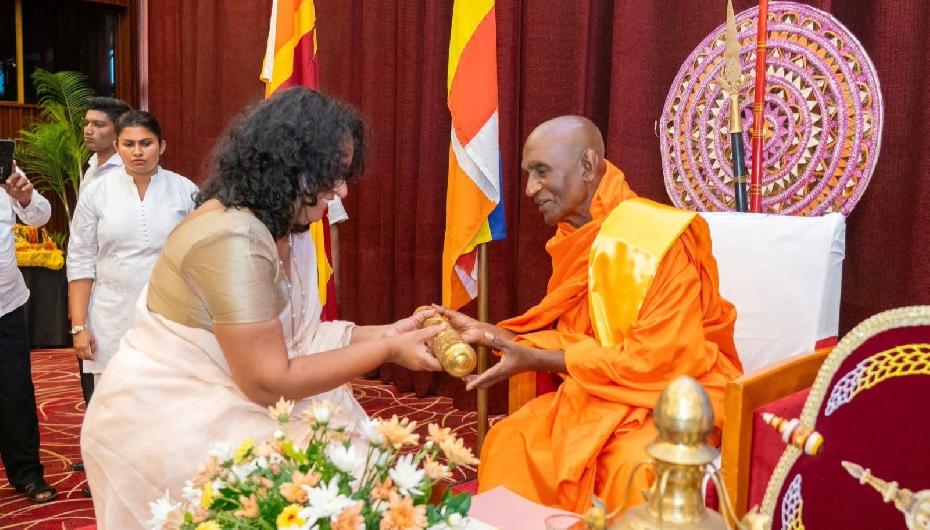
Prime Minister Dr. Harini Amarasuriya stated that the new education reforms will be introduced to Grade 6 in 2027, that necessary measures have already commenced to develop Piriven education, and that steps are being taken to formulate a national policy for higher education.

The Prime Minister made these remarks while paying respects to the Most Venerable Thibbatuwawe Sri Siddhartha Sumangala Abhidana Mahanayake Thero of the Malwathu Chapter of the Siyamopali Maha Nikaya, following the peace walk which commenced near the Temple of the Sacred Tooth Relic in Kandy on April 24.

Speaking to the media afterwards, the Prime Minister stated:

It is a matter of happiness for us as a country that the internationally recognized peace walk is being held in Sri Lanka. At the same time, world peace is a shared aspiration of all of us, and therefore I am pleased to have the opportunity to be associated with this occasion.

While responding to questions raised by journalists, the Prime Minister further stated:

The government is taking the necessary legal action regarding the financial fraud that has taken place. Investigations have already commenced in this regard. International assistance has also been offered for the investigations. In particular, the Government of Australia has informed us of its willingness to support the investigative process, as stated by the Australian High Commissioner.

A democratic country needs an opposition. However, the opposition still seems not to understand what the people expect from it. As a result, they continue attempting to inconvenience the government by raising baseless arguments. They are making false allegations against ministers. They even said they would bring a no-confidence motion against me. I am also waiting for the opportunity to present my facts.

We are continuing the education reform process. We are also working to formulate a national policy for higher education. In addition, a committee has been appointed regarding medical education to carry forward future activities.

Prime Minister’s Media Division

Third Day of “Walk for Peace” Commences with the Participation of the Prime Minister

The third day of the “Walk for Peace” pilgrimage, which began from Dambulla to the Gangaramaya Temple in Colombo, commenced this morning (24) in front of the Temple of the Sacred Tooth Relic, Kandy with the participation of Prime Minister Dr. Harini Amarasuriya and the Maha Sangha of both monastic chapters. The Most Venerable Pannakara Thero, who previously led a 110-day peace walk in the United States from Texas to Washington covering ten states, arrived in Sri Lanka together with members of the Maha Sangha to lead this peace walk.

Prior to the commencement of the third day’s pilgrimage, Prime Minister Dr. Harini Amarasuriya and the Maha Sangha, including Venerable Pannakara Thero, paid homage to the Sacred Tooth Relic and engaged in religious observances. Thereafter, the Maha Sangha chanted pirith and invoked blessings from a special platform set up near the Pattirippuwa of the Temple.

The third day’s peace walk, which commenced near the Temple of the Sacred Tooth Relic, will conclude at the Vidyawardhana Pirivena Pothgul Viharaya in Mawanella. The peace walk is scheduled to conclude on April 28.

The occasion was graced by the presence of members of the Maha Sangha of both monastic chapters, and attended by Central Province Governor S.B. Abayakoon, Diyawadana Nilame Nilanga Dela Bandara, public representatives, state officials, and a large gathering of devotees.

Prime Minister’s Media Division

“Invisibility of care work should not be considered incidental or accidental. It is structural, and this is a key feminist issue that has been raised by feminist economists worldwide for generations. We have long argued that economic systems depend on this hidden labour and on making care work invisible.” - Prime Minister Dr. Harini Amarasuriya.

Prime Minister Dr. Harini Amarasuriya emphasized that care work is central to the functioning of economies and societies and should no longer be treated as a peripheral issue, while addressing the inaugural session of The South-4-Care Learning Hub: Advancing Decent Work in the Care Economy in South Asia, held on April 21 in Colombo.

The four-day regional programme, taking place from April 21 to 24, brings together countries across South Asia for a South-South knowledge exchange and capacity-building initiative organized by the International Labour Organization (ILO), in partnership with the World Bank Group, and in collaboration with the International Training Centre of the ILO (ITCILO). The Learning Hub serves as a regional platform for South-South and Triangular Cooperation, enabling countries at different stages of development to exchange experiences, strengthen capacities, and identify pathways towards building gender-responsive and resilient economies.

Addressing the gathering, the Prime Minister stated that “the care issue, the care economy, is no longer a peripheral issue. It is central to how our economies function and how our societies sustain themselves,” emphasizing that care work, whether domestic work, childcare, elder care, or community support, forms the foundation upon which both formal and informal economies are built. She noted that care work is not simply about providing childcare services, elder care services, or strengthening social protection frameworks, but about recognising how care work, especially unpaid care work, sustains the economy itself.

She further noted that unpaid care responsibilities remain one of the most significant barriers to women’s labour force participation and stressed the need to move beyond defining productive work only in terms of paid labour.

“It is important that women have the choice whether to work in the labour force or not, but we also have to recognise that the unpaid work they do in sustaining families and communities eventually sustains our economy. That is one of the most important factors in the economy which does not get recognised and does not get value,” she stated. She further stressed that “we need to move beyond those categories where productive work is defined only in terms of paid work and really recognise unpaid care work as also productive.”

Prime Minister Dr. Amarasuriya pointed out that Sri Lanka presents a unique context in examining the care economy, where girls perform strongly in education while women continue to face high rates of domestic violence, heavy care burdens, and withdrawal from the labour force due to unpaid responsibilities. She emphasised that this requires a fundamental rethinking of how labour, productivity, and economic contribution are defined, particularly in relation to women’s participation in both informal and unpaid sectors.

“Labour force participation is not simply about productivity, it is about access to opportunity, dignity and inclusion,” she said, adding that no form of work, whether paid or unpaid, formal or informal, should remain invisible, undervalued, or underprotected. She further stated that care work is not only an economic issue but also an intergenerational one, shaping human capital through its impact on education, health, and wellbeing.

She noted that the Government of Sri Lanka, through the Ministry of Women and Child Affairs, is currently engaging with relevant stakeholders to develop a national policy on unpaid care work. This consultative process aims to recognise and value unpaid care work as a vital contribution to national development, reduce the disproportionate burden on women and girls through accessible public services and social protection, promote equitable redistribution of care responsibilities across households, communities, the state, and the private sector, and transform the social norms and gender stereotypes that continue to assign care work primarily to women.

The ILO also highlighted that care work, both paid and unpaid, is essential to the functioning of societies and economies, enabling labour market participation, supporting families and communities, and underpinning productivity and economic growth. However, across South Asia, care work remains undervalued and unevenly distributed, with women bearing a disproportionate share, while limited access to affordable and quality care services continues to deepen gender inequalities.

Recognising these challenges, the ILO adopted the Resolution concerning Decent Work and the Care Economy, affirming care as vital labour market infrastructure and calling for coordinated action to ensure access to quality care services while improving working conditions, rights, and protections for care workers.

The Prime Minister expressed confidence that the discussions over the coming days would generate meaningful insights and actionable recommendations to strengthen care systems across South Asia.

Prime Minister’s Media Division

Compensation payments and reconstruction activities related to the Ditwah relief measures must be expedited with special attention at the district level – Prime Minister Dr. Harini Amarasuriya

Closely monitor disaster damage and reconstruction progress at the provincial level, as necessary allocations have already been made to Provincial Councils

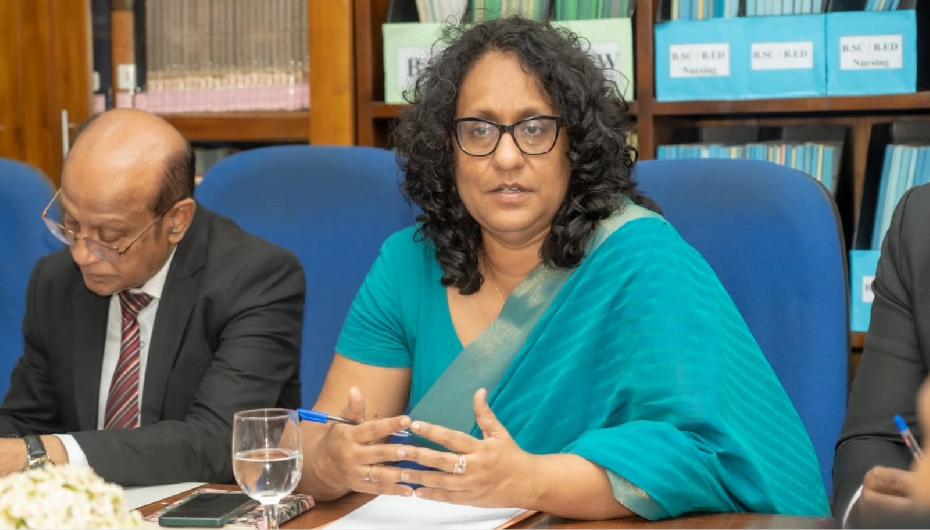
Prime Minister Dr. Harini Amarasuriya emphasized that compensation payments and reconstruction activities related to the Ditwah relief measures must be expedited with special attention at the district level. She further stated that all necessary allocations have already been made to Provincial Councils and instructed that the progress of disaster damage assessments and reconstruction efforts be closely monitored at the provincial level.

The Prime Minister made these remarks at a discussion held today (21) at Temple Trees under her patronage, aimed at informing Chairpersons of District Coordination Committees and public representatives from disaster-affected districts, in order to accelerate the implementation of the “Rebuilding Sri Lanka” programme. The discussion focused on expediting disaster relief and compensation payments, as well as the swift restoration of infrastructure damaged by the disaster.

The Prime Minister emphasized that Rs. 500 billion has been allocated for damages caused by the Ditwah cyclone, and that all relevant development activities must be completed before the end of 2026. The Prime Minister also instructed officials to pay special attention to resolving issues at the local level that are causing delays in compensation payments.

Senior Additional Secretary to the President, G.M.R.D. Aponsu, stated that the estimated cost for reconstruction following the Ditwah cyclone is approximately USD 3.4 billion. Accordingly, funds have been allocated for compensation across several sectors including housing and social infrastructure, agriculture and livestock, fisheries, industry and livelihoods, and irrigation. He further noted that 99% of the Rs. 25,000 allowance has already been disbursed, while 95% of the Rs. 50,000 resettlement allowance has been paid. Compensation for fully and partially damaged houses is still ongoing, and 99% of temporary relief centres have been closed.

Additionally, attention was drawn to several other measures, including providing Rs. 25,000 to affected schoolchildren, paying Rs. 1 million as compensation for each deceased individual, compensation for children who lost one or both parents, support for persons with disabilities affected by the disaster, compensation for agricultural losses, and expediting resettlement of displaced families. Measures such as allocating land for new housing construction and accelerating the issuance of reports from the National Building Research Organization were also discussed.

Focus was also placed on the reconstruction of affected schools, hospitals, and daycare centres, improving the accuracy and speed of data collection at the local level, and accelerating infrastructure development.

The event was attended by Minister of Plantation and Community Infrastructure Samantha Vidyarathna; Minister of Public Administration, Provincial Councils and Local Government Dr. Chandana Abayarathna; Deputy Minister of Agriculture and Livestock Namal Karunaratne; Deputy Minister of Trade, Commerce, Food Security and Cooperatives R.M. Jayawardena; Deputy Minister of Education Dr. Madhura Senevirathna; Members of Parliament; Chairpersons of District Coordination Committees; Chief of Staff to the President and Commissioner General of Essential Services Prabath Chandrakeerthi; Additional Secretary to the President Jayantha Bandara; and officials of the Prime Minister’s Office.

Prime Minister’s Media Division
Indian Vice President C.P. Radhakrishnan meets Prime Minister

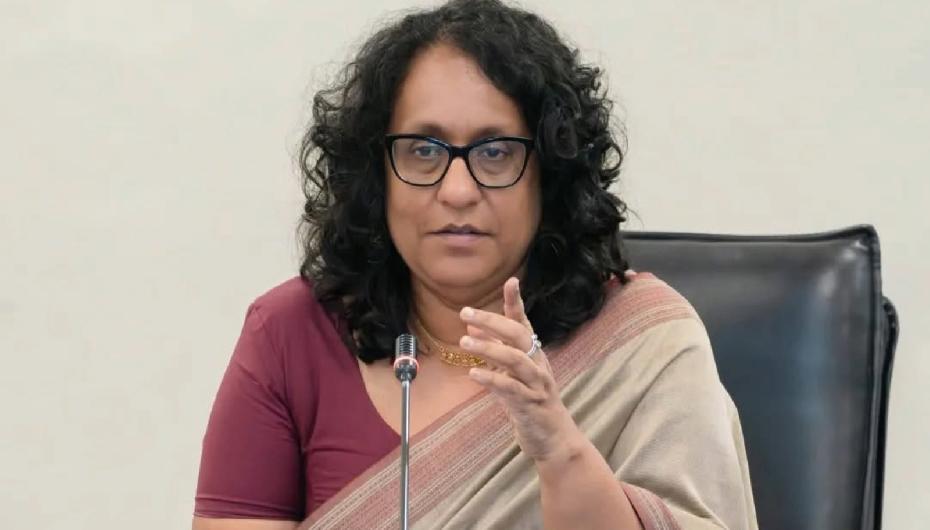
The Vice President of India, H.E. C.P. Radhakrishnan, who is currently on a two-day official visit to Sri Lanka, held a bilateral discussion with Prime Minister Dr. Harini Amarasuriya this morning (19) at Temple Trees.

Upon his arrival at Temple Trees, the Indian Vice President was received by Prime Minister Dr. Harini Amarasuriya. The Prime Minister also extended her congratulations to H.E. C.P. Radhakrishnan on his appointment as the Vice President of India.

During the meeting, the Vice President noted that this is his first official visit to Sri Lanka and expressed his appreciation for the warm welcome and hospitality extended to him during his stay.

The occasion was attended by the Minister of State for Fisheries, Animal Husbandry and Dairying, Prof. S.P. Singh Baghel; Members of Parliament Dr. K. Laxman and Dr. Medha Vishram Kulkarni; Foreign Secretary Vikram Misri; and the High Commissioner of India to Sri Lanka, Santosh Jha, and representing the Government of Sri Lanka the Minister of Foreign Affairs, Foreign Employment and Tourism Vijitha Herath; Minister of Sports Sunil Kumara Gamage; Minister of Women and Child Affairs Saroja Savithri Paulraj; Secretary to the Prime Minister Mr.Pradeep Saputhanthri; Secretary to the Ministry of Finance Harshana Suriyapperuma; Secretary to the Ministry of Education Nalaka Kaluwewa; and several other officials.

Prime Minister’s Media Division
Cultural Festival of the Sinhala and Tamil New Year Held Under the Patronage of the Prime Minister

Prime Minister Initiates Children into Learning at the Auspicious Time While Observing New Year traditional customs and rituals

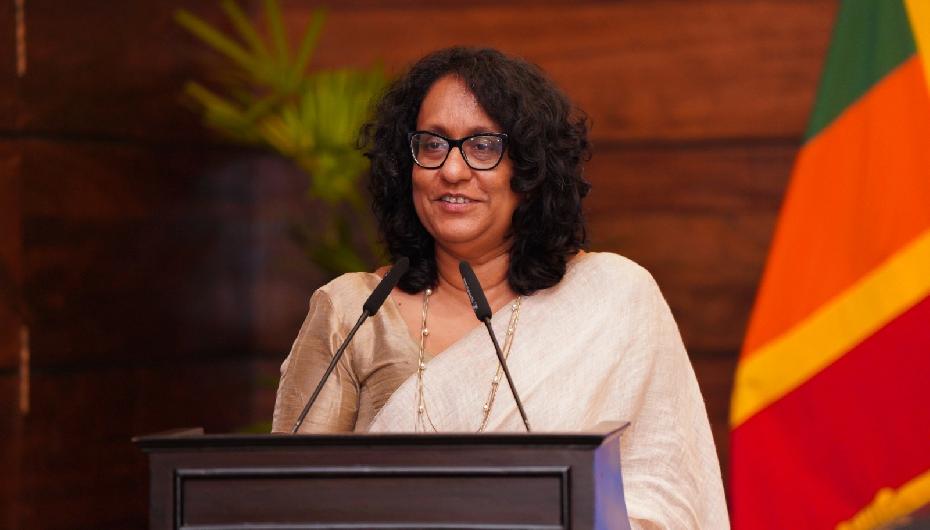
The Sinhala and Tamil New Year cultural festival, organized by the Ministry of Buddha Sasana, Religious and Cultural Affairs, was held today (14) in Gampaha under the patronage of Prime Minister Dr. Harini Amarasuriya, with the performance of traditional auspicious customs and rituals.

In accordance with tradition, during the Punya Kalaya (inauspicious time), the Prime Minister visited the Medagama Sri Sunandarama Viharaya in Gampaha and participated in religious observances. On this occasion, she received blessings from Venerable Thunmodara Samitha Thero, a member of the Karaka Sangha Sabha of the Sri Lanka Ramanna Maha Nikaya and the Chief Incumbent of the Medagama Sri Sunandarama Dharmaduta Piriven Viharaya.

The traditional observances of the Sinhala and Tamil New Year cultural festival were held at the residence of Mr. Darshana Weerasinghe in Gampaha. Marking the auspicious time for commencing work, and upon the invitation of the host family, Prime Minister Dr. Harini Amarasuriya planted a sapling within the premises. Concurrently, Minister of Buddha Sasana, Religious and Cultural Affairs, Dr. Hiniduma Sunil Senevi, and Minister of Foreign Affairs and Tourism, Vijitha Herath, also participated on this occasion.

Subsequently, the Prime Minister joined children in engaging in traditional folk games.

At the auspicious time for engaging work and educational activities, the Prime Minister participated with children in reading and writing, guiding them and symbolically marking the commitment to advancing the educational development of the nation’s children.

Thereafter, the Prime Minister and other distinguished guests observed the traditional customs of exchanging greetings, transactions and gifts with the host family, and joined them for the sharing of the customary New Year meal.

Extending New Year greetings to all citizens, the Prime Minister expressed her gratitude to all Sri Lankans, both at home and abroad, for their contributions in overcoming and effectively managing the various challenges faced by the country.

Speaking at the occasion, Minister Dr. Hiniduma Sunil Senevi stated that the Sinhala and Tamil New Year festival symbolizes renewal and purity, and reflects the energy of the sun. He also conveyed his wishes for a peaceful and prosperous New Year for all.

The occasion was attended by the Deputy Minister of Finance and Planning and Minister of Labour, Dr. Anil Jayantha; Deputy Minister of Labour, Mahinda Jayasinghe; Member of Parliament for the Gampaha District, Ruwan Mapalagama; along with the Gampaha District Secretary, Mayor, Divisional Secretaries, and a large number of government officials.

Prime Minister’s Media Division