Prime Minister's Office

The Prime Minister's Office carries out official duties of the Prime Minister of the Democratic Socialist Republic of Sri Lanka and provides necessary guidance, coordination facilities and leadership to achieve economic and social development goals in accordance with the government policies.

Moreover, the Prime Minister’s Office provides necessary leadership and guidance to fulfill the aspirations of people while standing by the side of them in the hour of need with great enthusiasm and commitment. It provides regular assistance in policy making and also necessary contribution, guidance and coordination through a people centered approach to achieve Sustainable Development Goals (SDG). It plays a crucial role in maintaining diplomatic relationships and international relations, through facilitating negotiations, conducting high level diplomacy with foreign leaders, countries, states and representatives and coordinating the efforts of various government agencies and departments involved in foreign affairs.

Vision

“An independent, sovereign and prosperous Sri Lanka”

Mission

“To provide the necessary leadership for an excellent government mechanism with good governance, maintaining an effective coordination between States, Foreign missions, United Nations and Non-Governmental institutions in order to realize the aspirations of the Sri Lankans and improve their quality of life”

“We have taken a severe blow, but Sri Lanka has not fallen. Our people have shown extraordinary resilience.” – Prime Minister Dr. Harini Amarasuriya

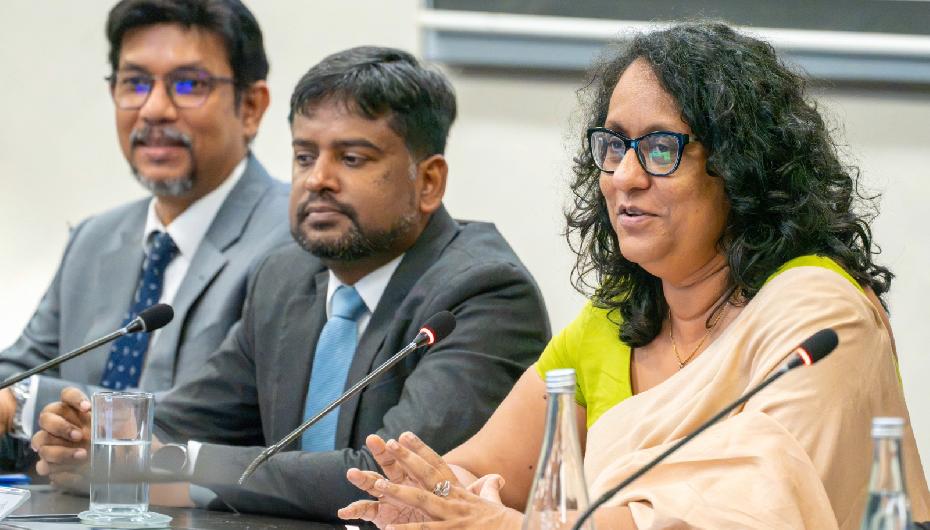
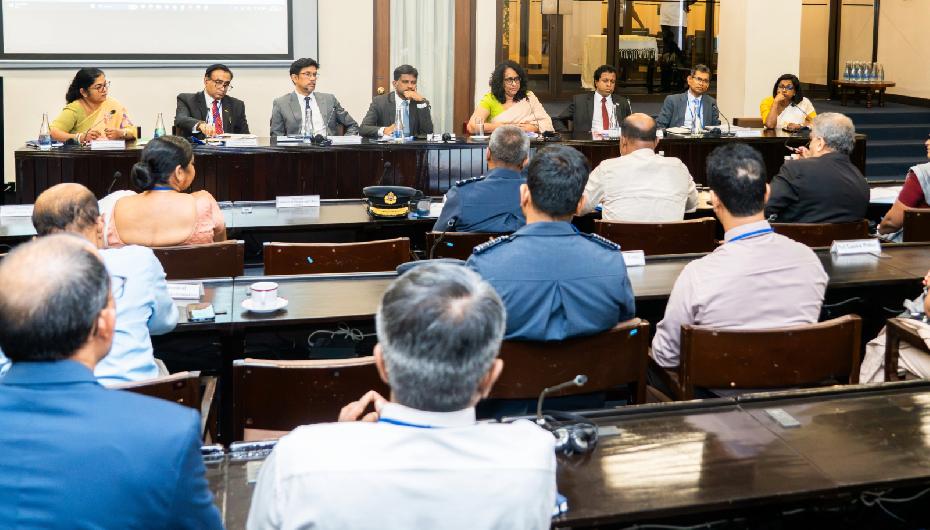
Prime Minister Dr. Harini Amarasuriya said that despite the recent devastation caused by severe flooding and landslides, Sri Lanka continues to recover rapidly due to the exceptional strength and solidarity demonstrated by the people. “We have taken a blow, but we are far from fallen. Our people have shown remarkable resilience, and that spirit has carried us through every crisis we have faced,” she stated while addressing the visiting NASSCOM Executive Committee and SLASSCOM leadership during their interaction held on 4th December at ICT Rathnadeepa Hotel, Colombo.

The meeting brought together NASSCOM—the apex body of India’s technology industry representing over 3,000 companies—and SLASSCOM, Sri Lanka’s national chamber for the IT and BPM sector with more than 350 member companies, to discuss digital-economy collaboration, investment opportunities, and the path forward for Sri Lanka’s ICT landscape.

The Prime Minister thanked the NASSCOM delegation for proceeding with their annual visit to Sri Lanka despite the country’s recent challenges, noting that their presence sends a strong message of confidence in Sri Lanka’s stability and recovery. She explained that the government, together with the World Bank and the United Nations, is conducting short- and long-term assessments to guide reconstruction efforts, which will include resettlement, improved disaster preparedness, flood control, and major infrastructure restoration.

During the discussion, the Prime Minister highlighted that Sri Lanka’s economic recovery plan remains firmly on course. She noted that the government has set a medium- to long-term target of 7% economic growth and emphasized two key priorities relevant to the visiting technology leaders: export diversification and accelerating the digital economy. “We are committed to developing a strong digital economy. This is an area where we look forward to India’s continued collaboration and partnership,” she said.

Responding to questions on how digital transformation is progressing within government institutions, Prime Minister stated that the Ministry of Education has already begun implementing a National Education Management System, which is expected to be launched in January. She also noted that other ministries have commenced their own digitalisation work and will be ready to introduce their systems in the coming months.

The Prime Minister also welcomed an offer of support from an Indian technology company specialising in drones for disaster response, mapping, and geospatial data. The representative proposed extending technical assistance to improve Sri Lanka’s disaster-management capabilities, including documentation and real-time monitoring. In response, Prime Minister acknowledged that Sri Lanka must strengthen early-warning systems and invest in modern technologies to better manage future disasters, noting that inadequate systems had limited the ability to predict this year’s extreme rainfall.

Detailing the government’s broader reform agenda, the Prime Minister explained that regulatory frameworks, governance reforms, and digital transformation initiatives are underway to make Sri Lanka an attractive destination for major IT and BPM investments. She stressed that Sri Lanka aims to reach USD 5 billion in export value in the IT and BPM sector by 2030, supported by improved human-resource development, education reforms, and a national plan to expand skilled employment. She further highlighted that the government is working closely with India on digitising the public sector, implementing a universal digital ID system, and introducing integrated platforms such as the National Education Management System.

The NASSCOM delegation’s visit forms part of a long-standing collaboration between NASSCOM and SLASSCOM, aimed at strengthening Sri Lanka’s ICT sector and positioning the country as a strategic extension market for leading Indian and global technology industries. Their visit also coincides with SLASSCOM’s preparations for the 2026 NASSCOM Technology & Leadership Forum.

Deputy Minister of Digital Economy Eranga Weeraratne, Chief Advisor to the President on Digital Economy Dr. Hans Wijesuriya, Indian High Commissioner H.E. Santosh Jha, and representatives from SLASSCOM and NASSCOM attended the event.

Prime Minister’s Media Division

The government is directly responsible only for financial donations directed to accounts designated by the government.

In response to the challenges faced by students affected by the adverse weather conditions in the country, many individuals and organizations have come forward to provide commendable support. In order to facilitate the receipt of financial donations from both local and international donors, the Government has introduced several designated bank accounts.

The Ministry of Education, the Ministry of Higher Education, and the Ministry of Vocational Education, and other relevant government ministries, are responsible only for financial donations made to the official accounts introduced by the Government. The Ministry has not granted consent or approval for any financial contributions directed to the accounts of any other association or individual. Therefore, responsibility for such donations lies solely with the respective organizations or individuals concerned. While appreciating the contributions made by the public during this difficult time, the Ministry urges donors to exercise caution and ensure accountability when making financial contributions for the welfare of the affected students.

For official government account information, please visit: www.donate.gov.lk

For Bank Transfers

1. US Dollar (USD)
Bank: Deutsche Bank Trust Company Americas, New York, USA
Recipient Account Name: Central Bank of Sri Lanka
Account Number: 04015541
Routing Number: 021001033
SWIFT: BKTRUS33XXX

2. Euro (EUR)
Bank: ODDO BHF Bank, Frankfurt am Main, Germany
Recipient Account Name: Central Bank of Sri Lanka
Account Number: 0000739854
IBAN: DE39500202000000739854
SWIFT: BHFBDEFF500

3. Pound Sterling (GBP) – Account 1
Bank: HSBC Bank Plc, London, UK
Recipient Account Name: Central Bank of Sri Lanka
Account Number: 39600144
Sort Code: 40-05-15
IBAN: GB48MIDL40051539600144
SWIFT: MIDLGB22XXX

4. Pound Sterling (GBP) – Account 2
Bank: Bank of Ceylon (UK) Ltd, London, UK
Recipient Account Name: Central Bank of Sri Lanka
Account Number: 88001249
Sort Code: 40-50-56
IBAN: GB89BCEY40505688001249
SWIFT: BCEYGB2LXXX

5. Japanese Yen (JPY)
Bank: MUFG Bank, Tokyo, Japan
Recipient Account Name: Central Bank of Sri Lanka
Account Number: 653-0407895
SWIFT: BOTKJPJTXXX

6. Australian Dollar (AUD)
Bank: Reserve Bank of Australia
Recipient Account Name: Central Bank of Sri Lanka
Account Number: 81736-4
BSB: 092002
SWIFT: RSBKAU2SXXX

7. Sri Lankan Rupees (LKR)
Account Name: Deputy Secretary to the Treasury
Account Number: 2026450
Bank: Bank of Ceylon
Branch Name : Thaprobane branch
Swift: BCEYLKLX

8. Sri Lankan Rupees (LKR)
Account Name: Deputy Secretary to the Treasury
Account Number: 014100130110432
Bank: People’s Bank
Branch: Union Place Branch
SWIFT: PSBKLKLX

Prime Minister’s Media Division

The waste accumulated due to the disaster situation must be systematically removed, and cleaning process should be carried out promptly. - Prime Minister Dr. Harini Amarasuriya

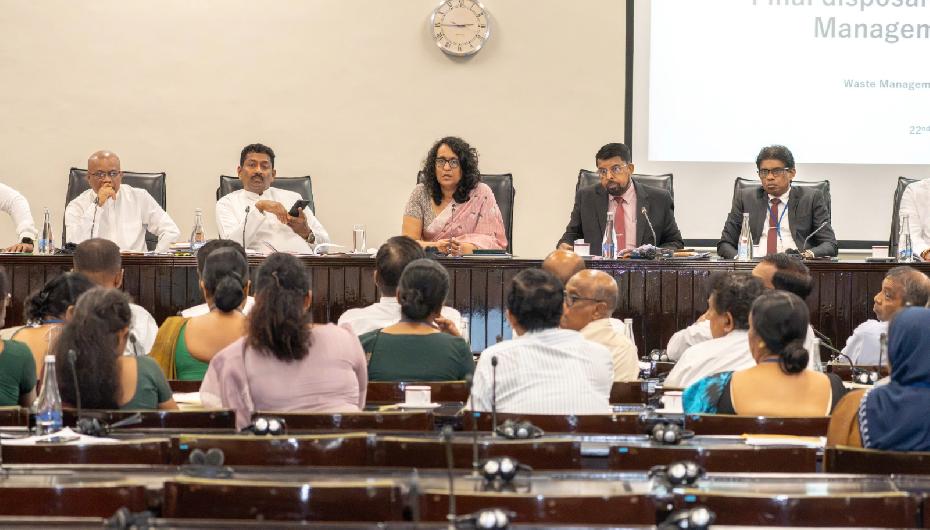
The meeting of the Western Provincial Waste Management Committee was held December 04 at the Prime Minister’s Office under the patronage of the Prime Minister. During the meeting, the Prime Minister stated that the waste accumulated as a result of the disaster situation should be systematically removed and that all cleaning process must be completed within three weeks.

As part of this programme, the committee decided that the waste currently piling up can be removed without difficulty, as a five-acre land plot owned by the Land Development Corporation in Kerawalapitiya has been allocated for this purpose. The relevant institutions also agreed to systematically remove the waste that will be stored on this land.

The meeting was attended by Minister of Urban Development Eranga Gunasekara, Western Province Governor Haniffa Yusuf, Member of Parliament and Chairman of the Colombo District Coordinating Committee Lakshman Nipuna Arachchi, Mayor of Colombo Vraie Cally Balthazaar, Secretary to the Prime Minister Pradeep Saputhanthri, Colombo District Secretary Ginige Prasanna Janaka Kumara, Additional District Secretary Kaushalya Kumari, Additional Secretary to the Prime Minister Sagarika Bogahawatta, officials including the Chairman of the Land Development Corporation, officials including the Director General of the Central Environmental Authority, and officials including the Additional General Manager of the Ceylon Electricity Board.

Prime Minister’s Media Division

We will extend every possible support to rebuild the lives of all those affected by the disaster. - Prime Minister Dr. Harini Amarasuriya

The Government extends gratitude to the Tri-Forces, the Police, public officers, volunteer organisations, the public, and all foreign nations who have dedicated themselves to supporting the affected people.

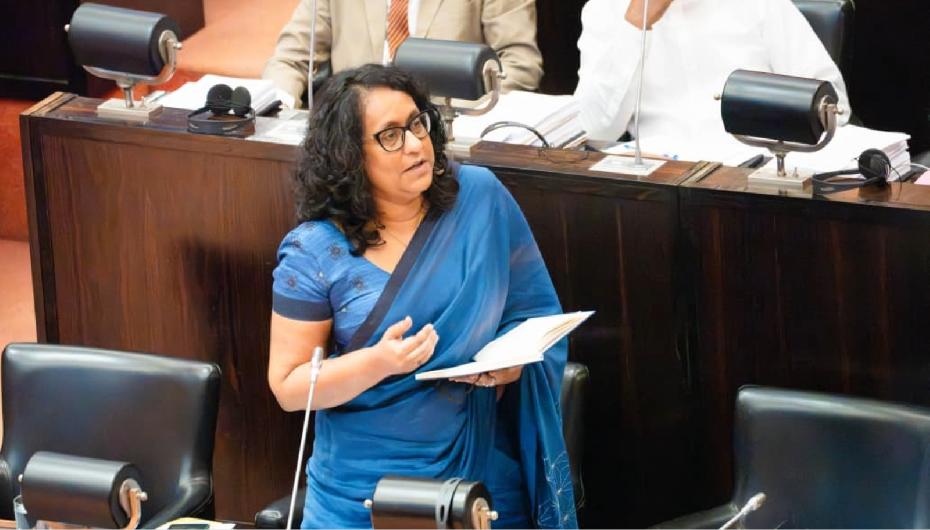
Prime Minister Dr. Harini Amarasuriya stated that the Government will provide the assistance to all citizens who have been affected by the recent disaster to rebuild their lives. The Prime Minister further expressed the Government’s gratitude to the Tri-Forces, the Police, public officials, volunteer organisations, the general public, and all foreign nations who have worked tirelessly on behalf of the affected communities.

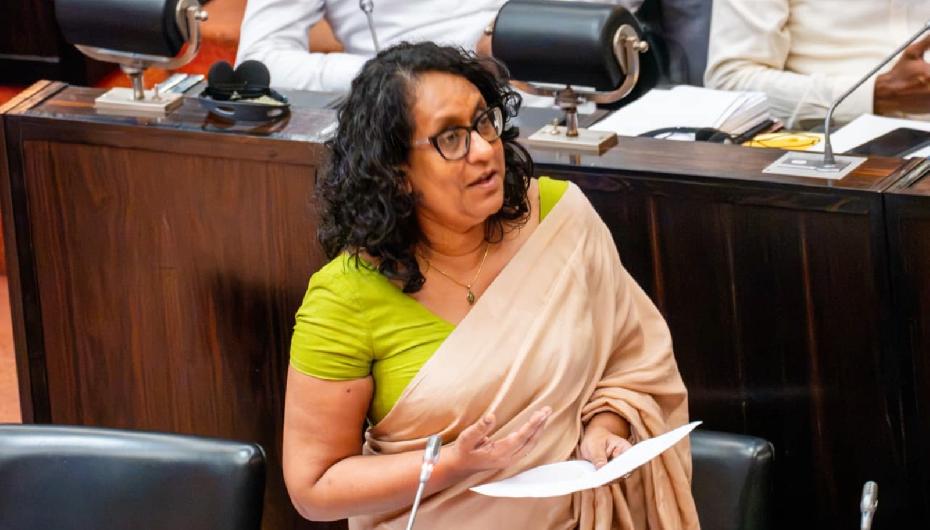
The Prime Minister made these remarks in Parliament on 03rd of December regarding the prevailing emergency situation in the country.

Addressing further, the Prime Minister stated,

Over the past few days, our country had to face one of the most severe disasters in its history. I extend my deepest condolences to all our fellow citizens who have lost their lives, who have been displaced, who have suffered property damage, and who have been affected in various ways due to this tragedy.

I would like to state at this moment that the Government will extend every possible support to help all those who have lost their homes, businesses, and belongings, and who have been displaced, to rebuild their lives.

During the past few days, public officials and members of Parliament, Pradeshiya Sabha, and municipal council have exerted immense effort to rescue the affected citizens and provide relief. I extend my special thanks to all the people’s representatives both from the Government and the Opposition who worked hand in hand with our public officials. Particularly during this challenging time, we witnessed the unity, courage, compassion, empathy, and mutual support among our people. This humanity and solidarity give us the strength to carry this mission forward.

I also extend my sincere appreciation to the Sri Lanka Army, Navy, Air Force, Police, public officials, and all emergency response teams who worked tirelessly to rescue the affected communities and continue to remain engaged in the mission. There were also instances where individuals sacrificed their own lives to save others highlighting the act of heroism that often goes unseen. I remember all of them with deep respect.

I also take this opportunity to honour Wing Commander Nirmala Siyambalapitiya of the Sri Lanka Air Force, who lost his life in the Bell 212 helicopter crash during rescue operations at Lunuwila Gin Oya, as well as the five Navy officers who went missing during operations to widen the lagoon outlet in Chundikulam to mitigate flooding. Their bravery in risking their lives to save thousands of others will never be forgotten.

Governors, District Secretaries, Divisional Secretaries, Grama Niladharis, Provincial Councils, and essential service providers are also on the ground, directly involved in operations during this difficult time. Their dedication must be greatly appreciated.

I extend my thanks to the heads and staff of the Disaster Management Centre, the Department of Meteorology, telecommunications service providers, the Ceylon Electricity Board, the National Water Supply and Drainage Board, and all institutions that worked tirelessly to restore essential services swiftly.

I also appreciate the service of the health sector including doctors, nurses, hospital staff, Public Health Inspectors, midwives, and community health workers for their unwavering commitment during this period.

It is also important to recognise the numerous volunteer groups, youth organisations, women’s groups, communities, and religious institutions that have stepped forward to assist those affected. They have tirelessly served the affected communities. The compassion and empathy of our people are the greatest strength of our nation. I extend my gratitude to all of them.

I hereby acknowledge the fellow foreign nations who have stood with us during this challenging time, offering assistance, assessing needs, and extending diplomatic support. I extend my gratitude to all the foreign governments, their representatives, and international organisations who have come forward to assist Sri Lankans in multiple ways.

In addition, Sri Lankans working and residing abroad, along with their organisations, have stepped forward to help rebuild the nation and support affected families. No matter where they live in the world, they have come together in solidarity with their motherland. I express my heartfelt gratitude to all of them.

I hereby acknowledge the service of the journalists, media institutions, social media activists, and responsible citizens who provided accurate and timely information throughout the crisis. Their service has been vital for directing rescue operations, ensuring proper coordination, and guiding the public safely. At the same time, we have observed attempts by some individuals to spread misinformation for personal gain. Managing such issues and delivering credible information responsibly is essential, and your service in this regard is invaluable.

I further extend appreciation to the Secretary of the Ministry of Education for coordinating activities across all sectors during this emergency.

Further appreciations are extended to the Commissioner General of Examinations, the Deputy Commissioners General, and the entire staff of the Department of Examinations for their dedication to safeguarding examination papers, securing completed answer scripts, protecting examination centres, and ensuring the continuation of examinations under extremely difficult circumstances. Their unwavering efforts are testament to their professionalism and commitment.

I hereby recall the heart wrenching incident where the Assistant Coordinating Officer of the Talawakelle Sumanasara Maha Vidyalaya regional collection centre lost his wife and children due to a landslide while he was on duty ensuring examination-related responsibilities.

Similarly, I extend my appreciation to the principals, teachers, and staff who worked tirelessly day and night to protect schools, assist affected families, and ensure that examinations continued without disruption. I also thank provincial education secretaries, directors, and all provincial and district education officials for their exemplary dedication during this crisis.

I acknowledge the service discharged by the staff of the Department of Examinations and the Ministry of Education who coordinated relief efforts, managed information, and responded swiftly to every challenge.

I extend appreciation to the leaders and staff of institutions under the higher education and vocational education sectors for their contributions. Their support in providing resources, facilities, and trained personnel during this crisis demonstrates the national solidarity. I also acknowledge the support extended by student unions of universities and higher education institutes.

During this period, one of primary responsibilities falls under ensuring uninterrupted education for our students and restoring their psychological well-being. We look forward to your continued support in this mission. As a Government, we remain committed to fulfilling this responsibility.

The collective effort carried out through ministries, districts, provinces, schools, and universities shows that our education system is not merely a system but truly one united family. As the Minister of Education, I acknowledge everyone who contributed to this national task.

The strength of the nation lies in its people in their uniquely compassionate hearts. We are proud of the generosity and humanity of the citizens of this country, who face any challenges with empathy. Even during the time of disaster, their vibrant, active, humane, and compassionate efforts marks the national strength.

The compassion shown by that “mother” who, despite her own hardships, came forward saying, “I can give something,” and donated two packets of Panadol, is a clear example of the kindness, generosity, and unity of our nation.

This is a difficult time of period. A challenging journey lies ahead, one that we must overcome with perseverance. Acting with compassion, love, and understanding toward one another is essential at this time. The pain and sorrow we feel for all those who lost their lives will never fade from our hearts. Yet we must move forward. We must rise from this immense tragedy with unity, courage, new perspectives, and renewed strength.

I once again acknowledge all those who place their trust in the responsibilities carried out by the government at this moment and who stand together with us. I also call upon all our Members of Parliament to set aside political divisions at this time and join hands in rebuilding our country.

Despite the countless difficulties including power outages, challenges in accessing water and food the patience you have shown and the strength with which you face these hardships represent the strength of our entire nation.

Prime Minister Dr. Harini Amarasuriya extended gratitude for the contributions made by the people in numerous ways throughout this difficult period, and for the courage and unity they have demonstrated.

Prime Minister’s Media Division

No content related to Tamil history and artistic heritage has been removed from the subjects of History and Art.

Prime Minister Dr. Harini Amarasuriya stated that no content related to Tamil history and artistic heritage has been removed from the subjects of History and Art.

The Prime Minister made this remark while responding to questions raised by Members of Parliament Dr. Padmanathan Sathiyalingam and S. Sritharan.

Expressing further views, Prime Minister Dr. Harini Amarasuriya stated,

There are two schools located on the island of Eluvaitivu in the Jaffna District. Since 1999, these schools have not been used as examination centres. Students from these schools have been sitting for the Ordinary Level examination at the examination centre of St. Anthony’s College in Kayts. Due to the very small number of students appearing for the examination from the schools on Eluvaitivu Island, those schools have not been maintained as examination centres. Statistically, only 10 students applied in 2022, 8 students in 2023, and 5 students in 2024 for the O/L examination. Therefore, these schools were not used as examination centres, and the students were directed to the nearest available examination centre. We also pay attention to ensuring transportation facilities for these students to travel to the examination centres in Kayts.

The Prime Minister further noted that the currently implemented History syllabus includes content related to Tamil kings. A separate section has been included in Lesson 7 of Grade 10 for this purpose. Likewise, Lesson 10 of Grade 10 covers a segment on the Jaffna Kingdom, including content related to the period of Cankili. Under the new education reforms, new recommendations have already been prepared for teaching History in Grade 6, which also include an illustration of the Cankili Kingdom.

History is not taught separately as Sinhala and Tamil. Instead, the subject is taught as Sri Lankan History, covering kings and kingdoms from various historical periods.

The Department of National Museums, as the leading institution responsible for preserving and exhibiting Sri Lanka’s history, has allocated space to display Tamil history. The Stone Antiquities Gallery of the Colombo Museum contains four Tamil copper plate inscriptions and two Tamil stone inscriptions. These inscriptions are established by the representatives of Indian emperors Rajaraja and Rajendra, as well as the Aryachakravarti rulers.

A book containing information about these Tamil inscriptions, authored by Prof S. Pathmanathan, is also available for purchase through the Publications Division of the Department of the National Museum. Moreover, a number of stone and metal sculptures related to the Hindu religion including sculpture of Shiva, Parvati, Nataraja, Sundaramurthi, and others are showcased. Additionally, a collection of Setu coins used during the Jaffna Kingdom is safely preserved.

The Colombo National Museum also houses a book authored by Dr. Krishnamurthy and Senarath Wickramasinghe on Chola and Pandya coins belonging to the Sangam era.

The Art subject consists of practical activities and the study of significant artworks. In structuring this subject, special attention has been given to international standards that include multicultural, multi-religious, and universal artistic creations. The Prime Minister noted that particular focus has been placed on this aspect in the recent revisions to the Art curriculum.

Prime Minister’s Media Division

In the prevailing situation, it is necessary to act strategically, while creating the proper investments ensuring that actions are discharged on proper policies. – Prime Minister Dr. Harini Amarasuriya

Prime Minister Dr. Harini Amarasuriya stated that, given the prevailing situation, it is necessary to be strategic and to make certain adjustments within the budget while properly strengthening the investments ensuring that actions are discharged on proper policies.

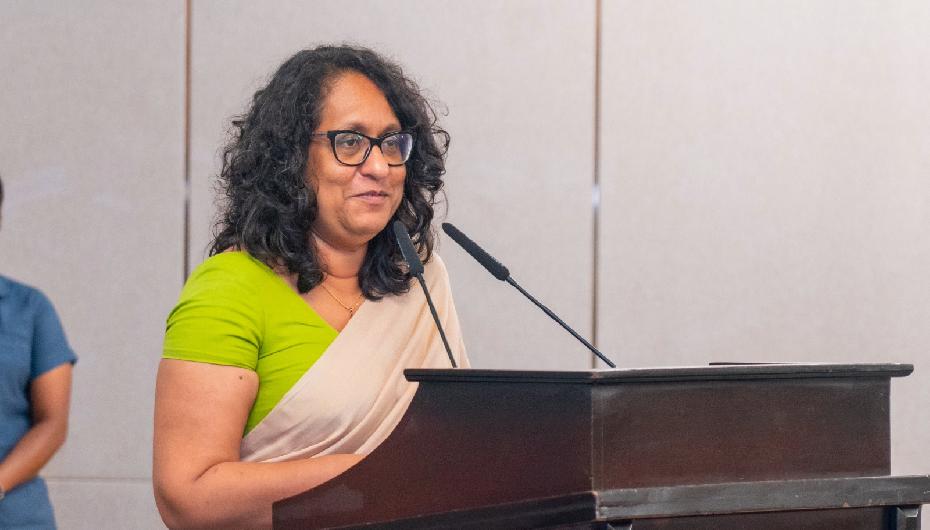
The Prime Minister made these remarks on 02nd of December while participating in the Sri Lanka Economic and Investment Summit 2025 held at the Shangri-La Hotel in Colombo.

More than 500 companies, representatives of various institutions, government officials, and nearly 100 investors from around the world attended the Sri Lanka Economic and Investment Summit 2025.

Addressing at the occasion, the Prime Minister Dr. Harini Amarasuriya stated

We stand firm in determination that we must move forward based on the calculations already undertaken for Sri Lanka. We are not going backwards. We cannot allow the country to fall back. Our goal is to achieve that target.

When circumstances and opportunities change, we are compelled to adapt. Particularly in facing the current and emerging challenges, we must take certain steps. However, this does not change the objectives of the government. During the budget speech, the President emphasized sustainable and inclusive growth, export diversification, digitalization, creating a productive economy, and reducing poverty.

We are working with firm determination to stay on the correct path towards achieving these goals.

The government discussed major strategic proposals through the budget. These included proposals related to overall economic restructuring necessary for trade, digitalization, and the reform process. We have already begun work on many laws and policies required for this. They are scheduled to be presented early next year. There is no reason for delay, we are moving even faster as it is part of our strategy for national recovery.

We are ensuring that the proper environment has been established in order to take the economy forward. We have no intention of postponing anything.

Given the current situation, we must be strategic, and certain adjustments will also need to be made within the budget.

In order to ensure that we can truly rise from this crisis, we must maintain our economy in a strong and resilient manner. These are not just ‘exaggerations’ done in order to maintain the appearance. These are fundamentals to keeping the economy stable and competitive. Therefore, these essential tasks must be carried out, and we must also find the necessary financial resources. At this point, correct policies are more important than money.

For example, implementing a single window system does not require large sums of money but a matter of proper management. What matters is establishing the correct policies. The political support is also crucial to ensure that everyone adheres to the laws, regulations, and procedures.

I would prefer to describe the change we expected to initiate in the education sector is more that a reform process but a transformation, because the plan is to introduce an entirely new approach.

This transformation is based on five key pillars: reforms in assessment and evaluation methods; reforms in educational administration; development of school infrastructure; and finally, public awareness.

We propose two major fundamental changes.

The first is a change in the assessment system. Currently, the education system is highly examination-oriented, where teaching and learning are centered on passing exams. Children learn in order to pass exams. What we aim for is a school-based, continuous assessment system. This will reduce the emphasis on competitive exams and increase attention on learning as an experience and a process. We plan to introduce modular systems and school-based assessments while reducing the weight placed on exams. This will be a significant change in education and will also require a change in the perspective.

The second major change we propose is integrating vocational education into mainstream education and as a selective subject of choice.

At present, vocational education is generally viewed as the “option for those who fail.” If someone fails an exam or is a backbencher, they are directed towards vocational education, and most of the time, students must drop out of school to pursue it. We propose integrating vocational education into the mainstream from Grade 6 onwards. This will allow all students to understand different vocational pathways and choose a vocational path at every level of education. This system is somewhat similar to the German model, where students spend part of their time in school and another portion in industrial training.

We also hope to engage in rapid discussions with the Chamber of Commerce and the private sector. Furthermore, we require continuous input from the private sector to identify areas where skills are in demand.

We welcome private sector involvement in providing internships for students and developing curricula in collaboration with the National Institute of Education. We also expect their support in curriculum development.

However, the aim of our education transformation is not merely to produce individuals for the labor market. Our primary objective is to create good citizens. Contributing to the economy is part of being a good citizen. Our goal is to produce citizens who, as employees, entrepreneurs, or creative individuals, are capable of taking the country to the next level.

The Sri Lanka Economic and Investment Summit 2025 was organized with the support of a number of international and local partners, including the Asian Development Bank, the World Bank Group, the Ministry of Foreign Affairs, the Department of Commerce of Sri Lanka, and the Ministry of Trade, Commerce, Food Security and Cooperative Development. Several foreign ambassadors based in Sri Lanka also participated in the summit.

Prime Minister’s Media Division